February 6, 2026
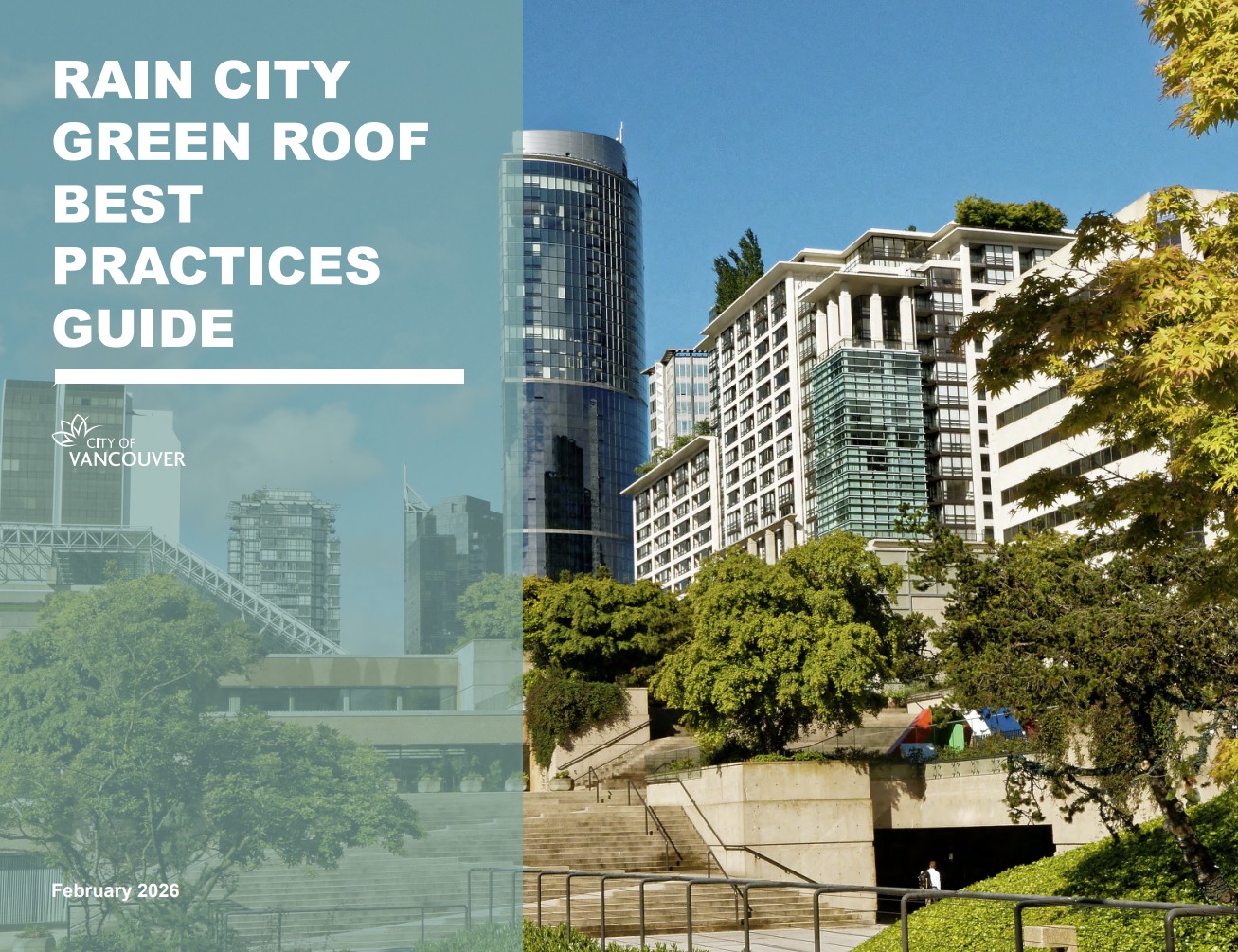
Rain City Green Roof Best Practice – February 2026
The City of Vancouver is facing a number of challenges with respect to rainwater management, water and air quality impacts, urban heat increases, biodiversity losses, and other related land development and climate adaptation issues.
The city is responding to these challenges by adopting a more holistic approach that uses green rainwater infrastructure (GRI) such as green roofs and rain gardens to help manage rainwater where it lands, improve air quality, reduce heat impacts, and enhance biodiversity and habitat.
Green roofs can also provide many other benefits such as complementing amenity, childcare, and urban agricultural spaces, increasing access to nature, and expanding educational opportunities. Green roofs and other GRI are useful for addressing these needs because they mimic certain natural processes and are multifunctional.
When undertaking a green roof project, it is important to consider both quality and function. Green roof quality and resilience can be enhanced by carefully considering all major lifecycle stages of design, installation, and ongoing maintenance. Green roof function and performance can vary greatly depending on design choices such as plant types and soil depths, which can emphasize particular benefits such as rainwater management, biodiversity enhancement, amenity provision, and urban agriculture.
The Full Guide can be viewed and downloaded HERE.